

Why Rubber Hardness Matters in Jack Pads
The Jack Rubber Pad is a small but essential component in safe vehicle lifting systems. Positioned between the jack and the vehicle’s lifting point, it protects the frame, improves grip, and distributes load evenly. While many users focus on shape or size, one of the most critical factors is rubber hardness.
Rubber hardness directly influences stability, durability, and surface protection during lifting. Selecting a Jack Rubber Pad from a reliable Manufacturer with standardized Production and Factory-scale quality control ensures consistent hardness and dependable performance for workshops, service centers, and bulk buyers.
This article explains why rubber hardness matters, how it affects performance, and what to consider when choosing the right Jack Rubber Pad for different applications.

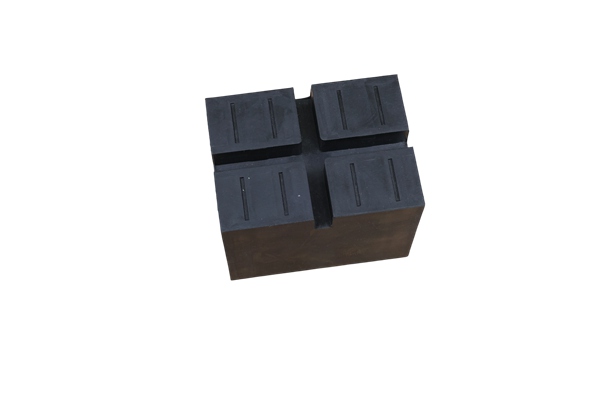
What Is a Jack Rubber Pad?
A Jack Rubber Pad is a molded rubber accessory installed on top of a car jack saddle. Its functions include:
·Preventing metal-to-metal contact
·Reducing slippage during lifting
·Protecting pinch welds and frames
·Distributing pressure across the contact area
Compared with bare steel jacks, a Jack Rubber Pad absorbs impact and adapts slightly under load, helping stabilize the vehicle and minimize damage to structural components.
Understanding Rubber Hardness
Rubber hardness is typically measured on the Shore A scale, which indicates how resistant the material is to indentation.
·Lower Shore A values mean softer rubber.
·Higher Shore A values mean harder rubber.
For Jack Rubber Pads, hardness must strike a balance. Rubber that is too soft compresses excessively, while rubber that is too hard fails to grip and protect surfaces properly.
During Factory Production, Manufacturers carefully control compound formulation and curing parameters to achieve a target hardness range suitable for load-bearing and protection.
How Hardness Affects Load Capacity
Load capacity and hardness are closely related.
When a vehicle is lifted, the Jack Rubber Pad experiences concentrated compressive force. The hardness determines how the pad reacts to this stress:
·Soft rubber deforms easily, increasing contact area but reducing structural support.
·Hard rubber resists deformation, maintaining shape and supporting higher loads.
An optimized Jack Rubber Pad uses a hardness level that resists collapse while still spreading force evenly across the contact surface.
From a Manufacturer perspective, Production testing verifies that each batch maintains stable compression performance under simulated lifting loads. This ensures consistency for Factory-level supply and bulk distribution.
Balance Between Grip and Protection
Another reason hardness matters is the balance between grip and surface protection.
·Softer pads provide better friction, reducing the risk of sliding.
·Harder pads protect shape but may slip more easily on metal surfaces.
If the Jack Rubber Pad is too hard, it behaves almost like plastic and can mark or dent vehicle frames. If too soft, it may shear or tear under load.
The ideal hardness allows the pad to slightly conform to the lifting point while keeping enough stiffness to stabilize the vehicle.
Modern Production methods allow Manufacturers to engineer compounds that maintain grip without sacrificing compressive strength.
Compression, Recovery, and Durability
Rubber hardness also affects elastic recovery, which is the ability of the pad to return to its original shape after being compressed.
High-quality Jack Rubber Pads demonstrate:
·Low permanent deformation
·Good rebound behavior
·Resistance to cracking
·Long-term stability under repeated loads
If hardness is poorly controlled, the pad may develop permanent flattening, reducing safety and service life.
Through Factory-controlled curing and inspection, Production teams ensure that each Jack Rubber Pad retains its resilience after repeated lifting cycles.
Production Control in Manufacturing
Hardness consistency is achieved through strict Production management.
Professional Manufacturers regulate:
·Rubber compound formulation
·Mixing ratios
·Mold temperature
·Curing time and pressure
Each of these variables influences the final Shore hardness.
In a Factory environment, pads are routinely tested for:
·Compression strength
·Surface friction
·Elastic recovery
·Dimensional accuracy
This systematic approach ensures that every Jack Rubber Pad delivered in bulk maintains the same performance profile, supporting reliability for distributors and service centers.
Applications Requiring Different Hardness Levels
Not all lifting situations require the same hardness.
Different use cases include:
·Light passenger vehicles – medium hardness for protection and grip.
·Performance cars – balanced hardness to protect aluminum frames.
·SUVs and utility vehicles – higher hardness for load-bearing strength.
·Workshop environments – durable hardness for repeated daily use.
Factory Production allows Manufacturers to offer multiple hardness grades to match different lifting requirements while maintaining quality consistency.
Choosing the Right Jack Rubber Pad
When selecting a Jack Rubber Pad, consider:
·Vehicle weight and lifting point design
·Jack saddle geometry
·Working frequency
·Environmental conditions
·Required load capacity
A properly hardened Jack Rubber Pad ensures:
·Stable lifting
·Reduced frame damage
·Longer pad lifespan
·Improved safety margins
Working with a Manufacturer that supports scalable Production and Factory-level quality inspection helps guarantee that hardness values are reliable across large-volume orders.
Conclusion: Jack Rubber Pad Performance Starts with Hardness
The Jack Rubber Pad may appear simple, but rubber hardness plays a major role in how it performs under load. From supporting vehicle weight to protecting contact surfaces and maintaining grip, hardness directly affects safety, durability, and efficiency.
Through controlled Manufacturer engineering, standardized Production processes, and Factory-scale supply, modern Jack Rubber Pads achieve the balance between stiffness and flexibility required for reliable lifting.
Choosing the right hardness is not just a technical detail—it is the foundation for safe, stable, and long-lasting performance every time a Jack Rubber Pad is used.
References
GB/T 7714:Gent A N. Engineering with rubber: how to design rubber components[M]. Carl Hanser Verlag GmbH Co KG, 2012.
MLA:Gent, Alan N. Engineering with rubber: how to design rubber components. Carl Hanser Verlag GmbH Co KG, 2012.
APA:Gent, A. N. (2012). Engineering with rubber: how to design rubber components. Carl Hanser Verlag GmbH Co KG.