

Why Jack Rubber Pads Matter More Than You Think
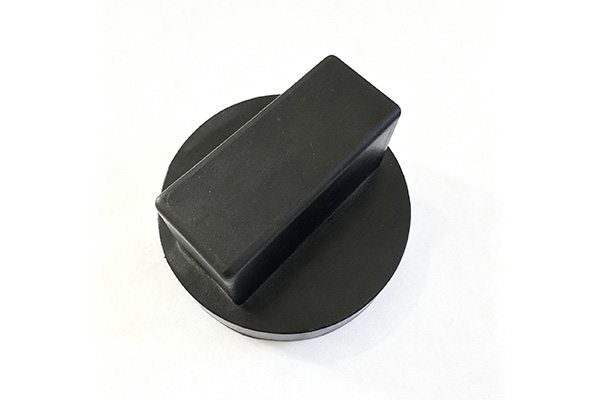
A jack rubber pad may seem like a small accessory, but it plays a critical role in vehicle lifting safety and protection. Many workshops, fleets, and individual users still rely on bare metal jacks without rubber pads, often overlooking the hidden risks involved. Over time, this practice can result in vehicle damage, safety hazards, and increased maintenance costs.
As a manufacturer-focused product produced for bulk supply, jack rubber pads are designed specifically to solve these problems. Understanding the common issues caused by using metal jacks without rubber pads helps professionals make safer and more cost-effective decisions.

1. Vehicle Undercarriage Damage
One of the most common problems caused by metal jacks without a jack rubber pad is direct damage to the vehicle’s undercarriage.
Metal-on-metal contact can:
·Scratch protective coatings
·Bend pinch welds
·Deform lifting points
·Damage frame rails over time
Modern vehicles often use thinner steel and reinforced lifting points that require even pressure distribution. A jack rubber pad absorbs impact and spreads the load evenly, preventing localized stress that can permanently damage the vehicle structure.
2. Increased Risk of Slipping and Jack Instability
Bare metal jacks provide very limited friction, especially when lifting vehicles with smooth or coated contact points. Without a jack rubber pad, the jack head can slip unexpectedly during lifting or lowering.
This can result in:
·Vehicle instability
·Sudden shifts in weight
·Increased risk of jack failure
·Safety hazards for operators
Rubber pads are engineered to provide anti-slip grip, significantly improving lifting stability. For workshops and industrial users, this safety benefit alone makes jack rubber pad production essential.
3. Damage to Painted or Coated Surfaces
Many vehicle lifting points are protected with paint, powder coating, or anti-corrosion layers. Metal jacks without rubber pads can quickly scrape away these coatings.
Once the protective layer is damaged:
·Corrosion risk increases
·Rust spreads faster
·Long-term structural integrity is affected
A jack rubber pad acts as a protective barrier, preserving coatings and extending vehicle lifespan—an important consideration for fleets and commercial vehicles.
4. Uneven Load Distribution
Metal jack heads typically have a small contact surface. Without a jack rubber pad, the lifting force is concentrated on a very limited area.
This uneven pressure can:
·Crack lifting seams
·Warp chassis components
·Cause long-term alignment issues
Rubber pads are designed with grooves, slots, or flat surfaces that increase contact area, ensuring even load distribution during lifting. Professional manufacturers design pads specifically for this purpose.
5. Increased Noise and Vibration During Lifting
Metal-on-metal contact often produces loud noise and vibration, especially when lifting heavy vehicles.
Common issues include:
·Sudden jolts during lifting
·Vibrations transferred to the vehicle body
·Reduced operator control
A jack rubber pad absorbs vibration and shock, allowing smoother and more controlled lifting. This is particularly important in professional workshops where repeated lifting is performed daily.
6. Reduced Jack and Vehicle Lifespan
Using metal jacks without rubber pads doesn’t just affect vehicles—it also accelerates wear on the jack itself.
Repeated metal contact leads to:
·Deformation of jack heads
·Surface wear
·Reduced equipment lifespan
Rubber pads act as a buffer, protecting both the jack and the vehicle. From a production and bulk supply perspective, this makes rubber pads a cost-effective investment for long-term operations.
7. Compatibility Issues with Modern Vehicles
Many modern vehicles feature:
·Low-profile designs
·Specialized lifting points
·Plastic or aluminum components near jack areas
Metal jacks without a jack rubber pad are often incompatible with these designs. Rubber pads, especially those designed by experienced manufacturers, are shaped to fit modern lifting points safely.
8. Safety Risks for Operators
Perhaps the most critical issue is operator safety. A slipping or unstable jack can lead to serious injuries.
Using a jack rubber pad reduces:
·Sudden jack movement
·Risk of vehicle drop
·Operator stress and fatigue
This is why professional workshops, service centers, and industrial users rely on factory-produced rubber pads designed for consistent performance.
9. Lack of Professional Standards Compliance
In many regions, workshop safety guidelines recommend or require protective jack interfaces. Using metal jacks without rubber pads may fail to meet internal safety standards or professional best practices.
Choosing rubber pads from a reliable manufacturer ensures:
·Consistent quality
·Stable material performance
·Suitability for repeated use
10. Why Jack Rubber Pads Are the Practical Solution
From safety and vehicle protection to efficiency and cost control, the solution is clear. A jack rubber pad eliminates nearly all issues associated with bare metal jacks.
High-quality pads produced through controlled manufacturing and production processes are designed for:
·Heavy loads
·Repeated use
·Bulk supply for workshops and fleets
Conclusion: Jack Rubber Pads Are Essential, Not Optional
Using metal jacks without rubber pads creates avoidable risks—from vehicle damage to serious safety hazards. A professionally designed jack rubber pad provides protection, stability, and long-term value.
For workshops, distributors, and industrial users, sourcing pads from a reliable manufacturer with stable production capacity and bulk supply capability ensures consistent quality and dependable performance.
When lifting safety, vehicle protection, and efficiency matter, a jack rubber pad is not an accessory—it’s a necessity.
References
GB/T 7714:Burlet-Vienney D, Galy B, Cusson Bertrand K, et al. Analysis of vehicle stability when using two-post above-ground automotive lifts: support pad slippage[J]. Safety, 2022, 8(3): 58.
MLA:Burlet-Vienney, Damien, et al. "Analysis of vehicle stability when using two-post above-ground automotive lifts: support pad slippage." Safety 8.3 (2022): 58.
APA:Burlet-Vienney, D., Galy, B., Cusson Bertrand, K., Beaugrand, S., Gonella, M., & Ledoux, É. (2022). Analysis of vehicle stability when using two-post above-ground automotive lifts: support pad slippage. Safety, 8(3), 58.