

When it comes to vehicle lifting safety, the Jack Rubber Pad plays a crucial protective role. Designed to sit between a hydraulic jack and the vehicle’s lifting point, it prevents metal-to-metal contact, reduces slippage, and protects pinch welds from damage.
As a professional Manufacturer with standardized Production processes and bulk supply capability, we often receive one common question: Are universal Jack Rubber Pads truly universal?
The short answer is — not always.
In this article, we break down what “universal” really means, what factors affect compatibility, and how to choose the right Jack Rubber Pad for different vehicles and lifting systems.
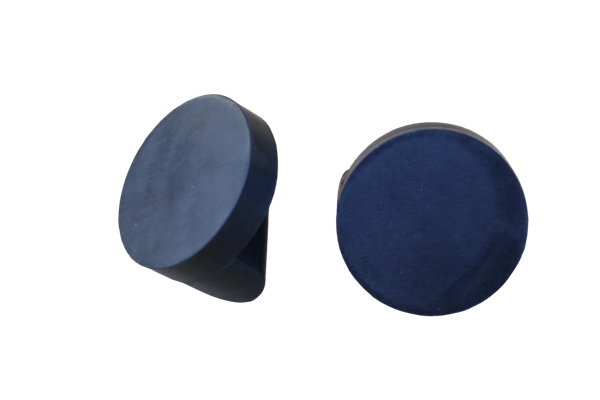
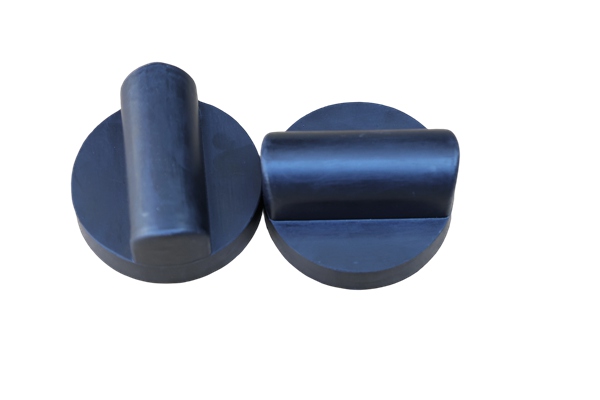
What Is a Universal Jack Rubber Pad?
A universal Jack Rubber Pad is marketed as being compatible with a wide range of vehicles and jack types. These pads are typically designed with:
·Standard diameter sizing
·Generic slot width for pinch welds
·Medium-density rubber composition
·Broad load-bearing surface
The idea behind “universal” is convenience — one product that fits most applications without requiring brand-specific customization.
However, vehicle lifting points vary significantly across manufacturers, vehicle classes, and jack types.
Why “Universal” Can Be Misleading
While many Jack Rubber Pad designs fit a majority of passenger vehicles, true universality is limited by several key variables:
1. Slot Width and Depth
Different vehicles have different pinch weld dimensions. If the slot in the rubber pad is:
·Too narrow → it won’t seat properly
·Too wide → it may not provide stable grip
·Too shallow → risk of slipping
·Too deep → uneven load distribution
This means a “universal” pad may technically fit, but not optimally.
2. Pad Diameter
Hydraulic jacks come in varying saddle sizes. A Jack Rubber Pad must sit securely on the jack saddle without overhang or instability.
If the pad diameter is too small, it may shift during lifting. If too large, it may not align properly with the vehicle’s lift point.
3. Load Capacity and Rubber Hardness
Vehicle weights vary significantly — from compact cars to SUVs and light trucks.
Rubber hardness (often measured in Shore A rating) determines:
·Compression resistance
·Stability under load
·Long-term durability
A truly universal Jack Rubber Pad would need to balance softness (to protect vehicle frames) with hardness (to support weight safely). In practice, one hardness level does not perfectly suit all vehicle classes.
Material Structure and Performance
The effectiveness of a Jack Rubber Pad depends heavily on material composition. Most high-quality pads use:
·High-density natural rubber
·Nitrile rubber (NBR)
·Reinforced composite rubber blends
These materials offer:
·Oil resistance
·Abrasion resistance
·Anti-slip surface friction
·Load-bearing stability
Inferior materials may crack under pressure or degrade with exposure to oils and temperature fluctuations.
As an experienced Manufacturer with controlled Production lines, material consistency is critical to ensuring stable performance across bulk supply batches.
Which Vehicles Can Use Universal Jack Rubber Pads?
Universal Jack Rubber Pads generally work well for:
·Most passenger sedans
·Compact cars
·Small SUVs
·Standard floor jacks
However, limitations may appear when used with:
·Heavy-duty trucks
·Low-clearance sports cars
·Specialty lift systems
·Asymmetric lifting arms
In these cases, a vehicle-specific or heavy-duty pad may be a better option.
Safety Considerations
Safety should never be compromised for convenience. When selecting a Jack Rubber Pad, ensure:
·Proper fit on jack saddle
·Secure engagement with pinch weld
·Adequate thickness to prevent metal contact
·Sufficient load rating
Improper pad selection may result in:
·Frame damage
·Slippage during lifting
·Uneven load distribution
·Increased accident risk
A universal label does not guarantee universal safety.
Manufacturing Quality Matters
Beyond size compatibility, manufacturing precision plays a major role in performance.
Reliable Manufacturer standards ensure:
·Accurate mold dimensions
·Consistent rubber density
·Uniform surface texture
·Stable bulk Production quality
When sourcing Jack Rubber Pads in volume, production control guarantees repeatability and long-term reliability — particularly important for automotive workshops and distributors.
So, Are They Truly Universal?
Universal Jack Rubber Pads are designed to fit most vehicles — but not all. Compatibility depends on:
·Vehicle lift point design
·Jack saddle dimensions
·Load requirements
·Rubber hardness
For general automotive maintenance, a well-designed universal pad can perform effectively. For specialized vehicles or heavy-duty applications, choosing a size-specific solution may provide better safety and durability.
Final Thoughts
The term “universal” in Jack Rubber Pad products should be understood as broadly compatible rather than universally perfect. Evaluating slot dimensions, pad diameter, load capacity, and material quality ensures proper performance and safety.
When selecting Jack Rubber Pad solutions from a trusted Manufacturer with stable Production capacity and bulk supply capability, you gain consistency, reliability, and long-term durability across automotive lifting applications.
References
GB/T 7714:Bhushan B, Ko P L. Introduction to tribology[J]. Appl. Mech. Rev., 2003, 56(1): B6-B7.
MLA:Bhushan, Bharat, and Pak Lim Ko. "Introduction to tribology." Appl. Mech. Rev. 56.1 (2003): B6-B7.
APA:Bhushan, B., & Ko, P. L. (2003). Introduction to tribology. Appl. Mech. Rev., 56(1), B6-B7.