

Why Anti-slip Pads Matter for Hydraulic Jacks
Hydraulic jacks are widely used in automotive repair, maintenance workshops, and roadside lifting applications due to their high lifting capacity and smooth operation. However, the force generated by a hydraulic system also increases the risk of slippage if the contact interface is not properly designed.
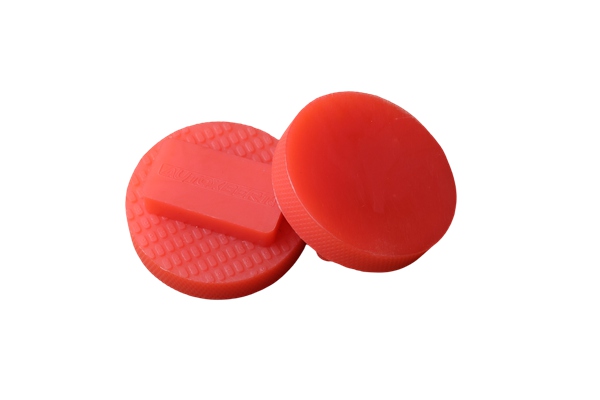
An Auto Jack Anti-slip Rubber Pad plays a critical role in improving stability and protecting vehicle lift points during hydraulic lifting. Understanding how these pads function and what factors influence their performance helps ensure safer and more reliable lifting operations.
_pad.jpg)
How Hydraulic Jacks Differ From Mechanical Jacks
Hydraulic jacks generate lifting force through fluid pressure, allowing them to lift heavier loads with less effort. This increased capacity means that contact pressure at the lifting point can be significantly higher than with manual or mechanical jacks.
Because of this, even minor instability at the contact surface can lead to movement or misalignment. Anti-slip rubber pads are specifically designed to manage these higher forces while maintaining secure contact.
What Is an Auto Jack Anti-slip Rubber Pad?
An Auto Jack Anti-slip Rubber Pad is a protective rubber interface placed between the hydraulic jack saddle and the vehicle’s designated lift point. Its primary functions include increasing friction, distributing load, and preventing direct metal-to-metal contact.
These pads are commonly used in professional workshops where hydraulic jacks are standard equipment and lifting safety is a top priority.
Material Properties That Enable Anti-slip Performance
The effectiveness of an anti-slip pad begins with material selection. Rubber compounds used for hydraulic jack pads must balance elasticity and strength.
Key material characteristics include:
·High friction coefficient under load
·Resistance to compression set
·Ability to recover shape after unloading
Rubber that is too soft may deform excessively, while overly hard rubber can reduce grip. Optimized material formulation ensures consistent anti-slip behavior.
Surface Design and Grip Enhancement
Surface texture significantly influences anti-slip performance. Smooth pads rely only on friction, while textured pads add mechanical resistance to movement.
Common surface features include grooves, slots, and patterned textures that align with vehicle lift points. These designs help prevent lateral movement when hydraulic force is applied.
Load Distribution Under Hydraulic Pressure
Hydraulic jacks apply force gradually but powerfully. Without proper load distribution, pressure can concentrate on a small contact area, increasing the likelihood of slip or damage.
An anti-slip rubber pad spreads load across a broader surface, reducing peak stress and stabilizing the lift. This is especially important when lifting heavier vehicles.
Protecting Vehicle Undercarriage and Lift Points
Direct contact between a metal jack saddle and the vehicle can damage pinch welds, coatings, or reinforced lift areas. Rubber pads act as a buffer, reducing surface damage while maintaining secure support.
By absorbing minor vibrations and irregularities, the pad protects sensitive underbody components during lifting and lowering.
Safety Advantages for Workshop and Roadside Use
Stability is essential when working beneath a lifted vehicle. An Auto Jack Anti-slip Rubber Pad reduces the risk of sudden movement caused by surface irregularities or slight misalignment.
Improved grip enhances operator confidence and contributes to a safer working environment, whether in a professional garage or during emergency roadside repairs.
Durability and Performance Over Repeated Use
Hydraulic jacks are often used repeatedly throughout the day in workshop environments. Anti-slip rubber pads must maintain their shape and surface integrity under repeated loading.
Quality pads resist cracking, surface glazing, and permanent deformation, ensuring long-term performance even with frequent use.
Compatibility With Different Hydraulic Jack Designs
Hydraulic jacks vary in saddle size and shape. Anti-slip pads should fit securely on the jack saddle to prevent shifting during operation.
Proper compatibility ensures that the pad remains centered and effective throughout the lifting process.
Manufacturing Consistency and Quality Control
From a manufacturer perspective, controlled production processes are essential for maintaining consistent hardness, thickness, and surface texture. This consistency ensures reliable performance, particularly in bulk supply scenarios where uniform quality is expected.
Well-controlled manufacturing contributes directly to predictable anti-slip behavior across multiple pads.
When to Inspect or Replace Anti-slip Rubber Pads
Regular inspection helps identify wear before it compromises safety. Pads should be replaced if signs such as cracking, excessive compression, or loss of surface texture appear.
Timely replacement ensures continued protection and stable lifting performance.
Conclusion: What to Know Before Using Anti-slip Pads With Hydraulic Jacks
An Auto Jack Anti-slip Rubber Pad is a critical accessory for safe and effective hydraulic jack operation. Through proper material selection, surface design, and load distribution, these pads enhance grip, protect vehicle structures, and improve lifting stability.
By understanding how anti-slip rubber pads work and selecting the right design for hydraulic jacks, users can achieve safer, more reliable lifting across a wide range of automotive applications.
References
GB/T 7714:Persson B N J. Sliding friction: physical principles and applications[M]. Springer Science & Business Media, 2013.
MLA:Persson, Bo NJ. Sliding friction: physical principles and applications. Springer Science & Business Media, 2013.
APA:Persson, B. N. (2013). Sliding friction: physical principles and applications. Springer Science & Business Media.